
History
The History of the Olive: An 8,000-Year Heritage
The fascinating story of the olive — the sacred tree of the Mediterranean — from the dawn of civilizations to today.
9 min read
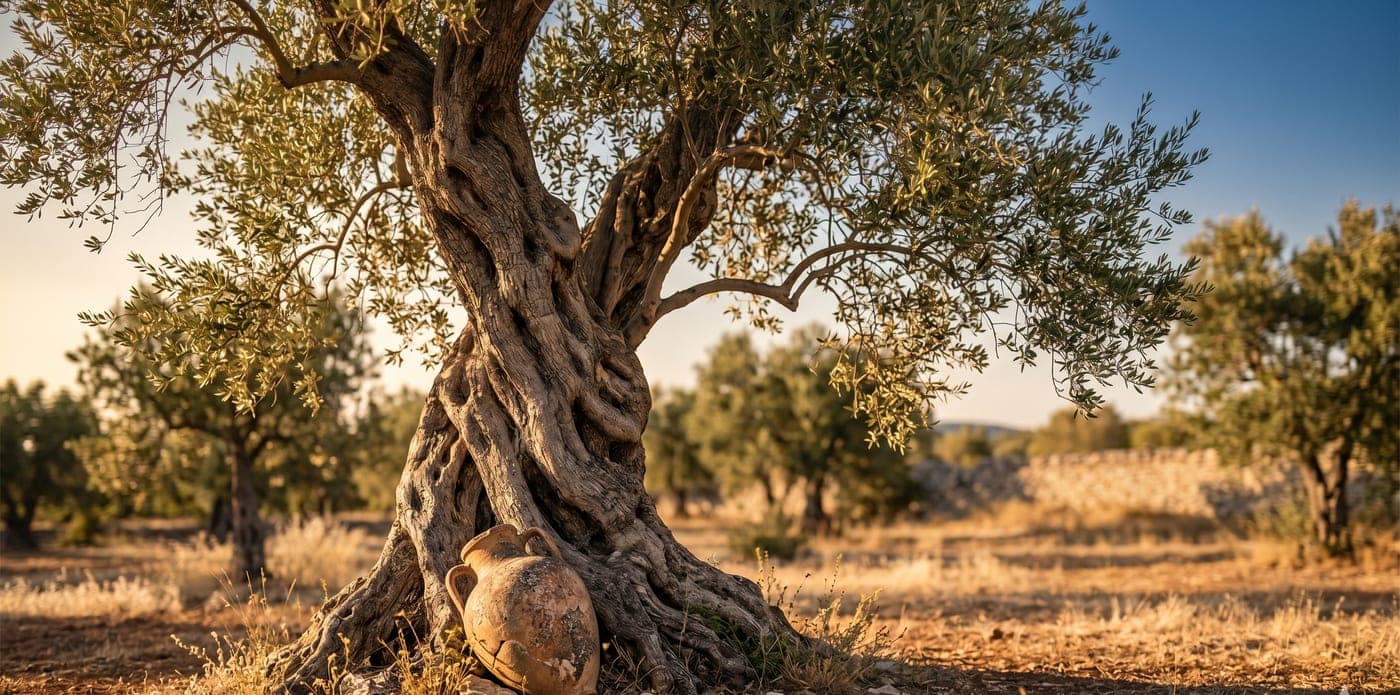
The olive tree (Olea europaea) is one of the oldest cultivated plants in human history. Archaeological evidence shows that the olive was first domesticated around 8,000 years ago in the Eastern Mediterranean basin — across what is now Anatolia, Syria and Palestine. The wild olive is far older still, growing in these lands for tens of thousands of years.
The olive is not merely a food; it is a symbol that has accompanied the rise of civilizations. For thousands of years it has touched human life as an emblem of peace, abundance, wisdom and immortality.
The Domestication of the Olive
Turning the wild olive into the fruitful cultivated tree through grafting was one of the great turning points in the history of agriculture. Once people discovered the oil-bearing fruit, they patiently improved the tree over centuries. Because an olive tree can live for hundreds — even thousands — of years, it became a living heritage passed from generation to generation.
The olive tree is drought-resistant, grows even in poor soil, and bears fruit for generations with care. For Mediterranean peoples it was therefore not only a food but a source of security and wealth.
Anatolia: Homeland of the Olive
Many scientists accept that the ancestor of the cultivated olive emerged somewhere between Southeastern Anatolia and the Mediterranean coast. The Aegean and Mediterranean shores have been the heart of olive growing for millennia.
Olive oil workshops and stone presses found in the ancient cities of Anatolia — such as Ephesus, Pergamon and Klazomenai — bear witness to the deep history of production in these lands. The 6th-century BC olive oil workshop unearthed at Klazomenai near İzmir is among the oldest known industrial oil mills in the world.
Pure Verda is a part of this heritage: a brand nourished by the Aegean's ancient trees, bringing a thousands-of-years-old tradition together with modern production.
The Phoenicians and the Spread Across the Mediterranean
The Phoenicians — master seafarers — and later the Greek colonies carried olive saplings and olive oil culture by ship across the whole Mediterranean. Olive oil was a precious trade good transported from port to port in amphorae; it was, in effect, the liquid gold of its age.
The oil was used in every area of life, from lighting to nutrition, from religious rites to skin care. This widespread demand made olive growing one of the pillars of the Mediterranean economy.
The Olive in Ancient Greece and Rome
In Greek mythology, when the goddess Athena gave the people of Athens the first olive tree as a gift, the city took her name; the olive became its sacred symbol. Olympic champions were crowned with wreaths woven from olive branches (the kotinos).
The Romans turned olive growing into a science. They classified different oil qualities, refined pressing techniques and spread production across the empire. The 'first harvest' oil was considered the most precious — just as it is today.
The Olive in Sacred Texts and Beliefs
In all three Abrahamic religions, the olive and olive oil are held sacred, regarded as symbols of abundance, healing, peace and enlightenment. The dove carrying an olive branch to Noah's ark remains a universal symbol of peace.
Lamps in temples were lit with olive oil, and kings and priests were anointed with it. Described as a 'blessed tree,' the olive has carried a spiritual meaning beyond its material value.
Olive Oil in Ancient Medicine and Beauty
Hippocrates, considered the father of medicine, recommended olive oil for dozens of ailments and called it the 'great healer.' In antiquity olive oil was used across a wide spectrum — from wound care to digestive health, from skin and hair care to muscle massage for athletes.
It was indispensable for beauty, too: from Egyptian queens to the noblewomen of Rome, many nourished their skin and hair with olive oil. Many benefits confirmed by modern science were, in fact, discovered intuitively thousands of years ago.
Anatolian Olive Growing from the Ottomans to the Republic
In the Ottoman era, Ayvalık, the Gulf of Edremit and the Aegean coast became the center of olive growing. The oil mills and soap works established in these regions both fed the domestic market and contributed to the economy through exports. Olive oil was essential to cooking, lighting and soap making.
With the Republic, olive growing modernized; groves expanded and production techniques advanced. Today Turkey is among the world's largest producers of olives and olive oil — and the Aegean is still the beating heart of this heritage.
A Tradition That Reaches the Present
Pressed for centuries in stone mills, the olive is today processed in modern cold-pressing facilities that preserve its nutritional value. The technology has changed, but the essence remains the same: a healthy, natural and real flavor.
At Pure Verda, we fit this 8,000-year story into a single bottle. In every drop you'll find both the soil of the Aegean and the labor of a thousands-of-years-old tradition.