
Guide
Types of Olive Oil: Extra Virgin, Riviera, Refined
What the terms on the label really mean: which olive oil is for what, and how to choose.
5 min read
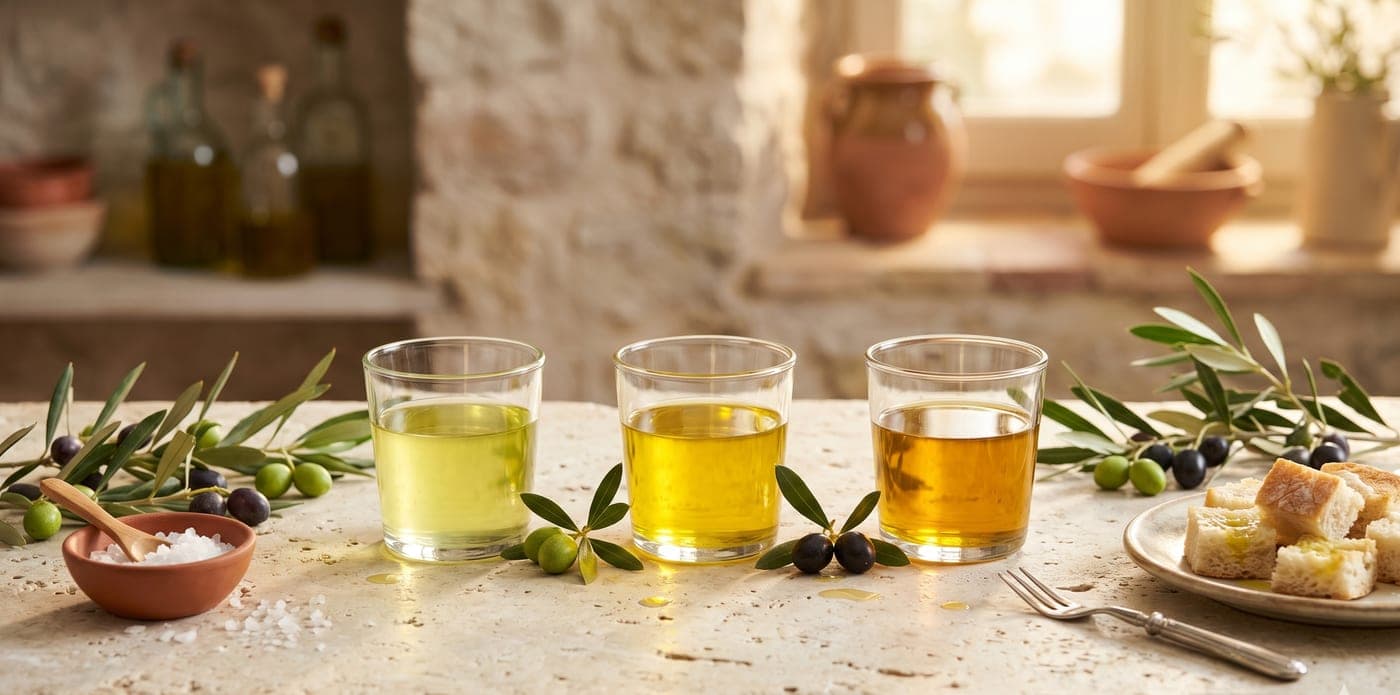
On store shelves you'll meet dozens of different olive oils. Knowing the difference between them helps you make the right choice for both your kitchen and your health. Here are the most common categories.
Extra Virgin Olive Oil
The highest quality grade. Obtained from the olive using only mechanical methods (pressing), with no chemical processing. Its free acidity is below 0.8%; in extra virgin oils it is usually much lower. It is the richest in aroma and the highest in nutritional value — ideal for raw consumption.
Virgin Olive Oil
Also obtained by mechanical means only, but with slightly higher acidity (up to 2%). It is flavorful and natural; suitable for everyday use.
Riviera (Ordinary Olive Oil)
A blend of refined olive oil and virgin olive oil. Its aroma is milder and it tolerates higher heat; it is often preferred for frying and cooking.
Refined Olive Oil
Obtained by purifying high-acidity virgin oils with heat and processing. Its taste and smell are neutral; it is rarely sold on its own and is mostly used in blends.
Tips for the Right Choice
- For raw use (salads, breakfast): extra virgin
- Look for the harvest year and the words 'cold-pressed'
- A dark glass bottle protects the oil from light
- Low acidity = a sign of high quality